
Enhanced Visualization
High-definition, magnified three-dimensional visualization can help the surgeon identify important anatomical structures during complex procedures.
Advanced robotic cancer surgery combines surgical precision, enhanced visualization and minimally invasive techniques to provide carefully planned cancer treatment with the goal of reducing surgical trauma and supporting faster recovery.
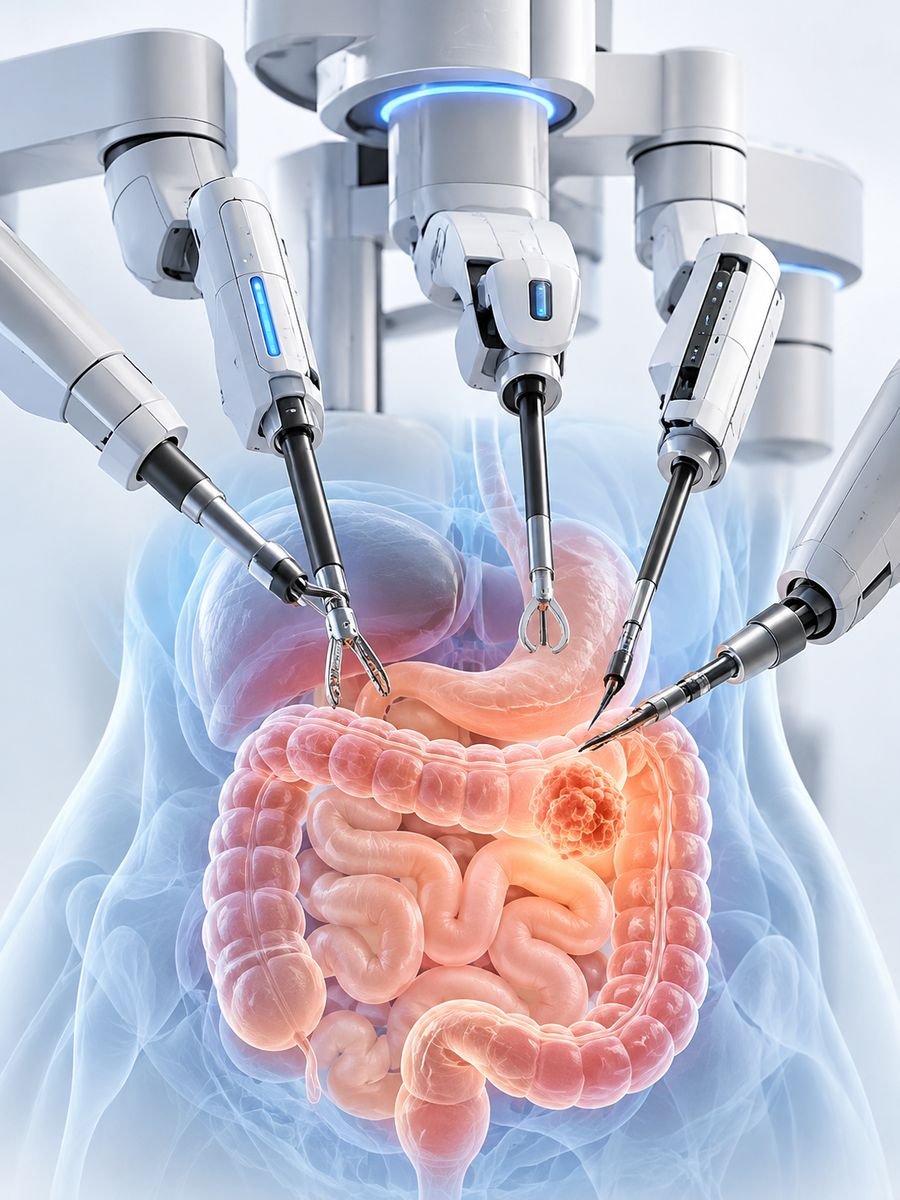
Robotic cancer surgery is an advanced form of minimally invasive surgery in which a surgeon controls specialised robotic instruments to perform complex surgical procedures through small incisions.
The robotic system can provide high-definition, magnified three-dimensional visualization and precise instrument control. This can be particularly useful when operating in anatomically complex areas where precision and careful tissue handling are important.
Robotic systems assist the surgeon with precision and visualization. The surgeon remains in control of the procedure throughout the operation.
Depending on the cancer type, stage and individual patient factors, robotic surgery may offer several advantages over conventional open approaches.
High-definition, magnified three-dimensional visualization can help the surgeon identify important anatomical structures during complex procedures.
Robotic instruments are designed to provide controlled and precise movements, which can be useful when working around delicate structures.
Robotic procedures generally use small incisions rather than a large surgical opening, depending on the procedure being performed.
Minimally invasive techniques may help reduce surgical trauma, postoperative discomfort and recovery time in appropriately selected patients.
The suitability of robotic surgery depends on the cancer location, stage, tumour characteristics and overall health. Treatment is planned individually after appropriate evaluation.
Robotic-assisted prostate surgery may be considered for selected patients requiring surgical treatment for prostate cancer.
Robotic techniques can be used for selected kidney procedures, including approaches designed to remove a tumour while preserving healthy kidney tissue when appropriate.
Minimally invasive robotic procedures may be used in selected gynaecological cancer surgeries depending on tumour characteristics and treatment goals.
Robotic approaches may be considered for selected colorectal and rectal cancer surgeries where minimally invasive treatment is appropriate.
Robotic surgery can be considered for selected bladder cancer procedures, including complex pelvic surgeries.
In selected cases, robotic techniques may be useful for cancers involving anatomically difficult areas where minimally invasive surgery is appropriate.
Open surgery remains an important treatment option for many cancers and complex cases. The appropriate approach depends on tumour location, stage, anatomy and the patient's overall condition.
Robotic surgery does not replace open surgery in every situation.
Imaging, pathology reports and other investigations are reviewed to understand the cancer type, stage and location.
The surgical approach is selected according to the tumour characteristics, anatomy, overall health and treatment objectives.
During surgery, the surgeon controls the robotic system and performs the planned procedure using specialised minimally invasive instruments.
After surgery, recovery and follow-up are carefully monitored. Additional treatment may be recommended depending on the final pathology and cancer stage.

Dr. Nitin Singhal is an experienced surgical oncologist in Ahmedabad providing advanced cancer surgery with a focus on precision, minimally invasive techniques and personalised treatment planning.
Each patient's treatment plan is determined after evaluating the cancer type, stage, imaging, pathology and overall health. When robotic surgery is appropriate, it may form an important part of a comprehensive cancer treatment plan.
Experiences shared by patients and families after robotic cancer surgery and related minimally invasive procedures.
“My wife underwent robotic cancer surgery under Dr. Nitin Singhal’s care, and the results were excellent.”
A patient recovery story from Sterling Hospitals highlights the treatment journey and recovery following robotic surgery.
A colorectal cancer patient story features recovery after treatment planned with robotic surgical precision.
Patients looking for robotic cancer surgery Ahmedabad can consult an experienced surgical oncologist to understand whether a robotic approach is suitable for their condition.
Choosing the right robotic cancer surgeon Ahmedabad involves understanding the cancer type, stage, surgical requirements and available treatment options. A specialised cancer surgery hospital Gujarat can provide coordinated evaluation, surgery and follow-up care.
Robotic surgery is one form of minimally invasive cancer surgery. Depending on the procedure, robotic technology may offer enhanced visualization and precise instrument control.
Patients searching for a robotic surgery specialist Ahmedabad, da Vinci robotic surgery India, or robotic cancer treatment near me Ahmedabad should first undergo a proper clinical evaluation to determine whether robotic surgery is appropriate.
Answers to common questions about robotic cancer surgery.
Robotic cancer surgery is an advanced form of minimally invasive surgery in which the surgeon controls specialised robotic instruments through small incisions. The system provides enhanced visualisation and precise instrument control while the surgeon remains in control throughout the operation.
Not for every patient. The appropriate approach depends on the cancer type and stage, tumour location, anatomy and overall health. In selected patients, robotic surgery may offer smaller incisions, enhanced visualisation and potentially faster recovery.
Robotic surgery may be considered for selected prostate, kidney, colorectal, rectal, bladder and gynaecological cancer procedures. Suitability is decided after clinical evaluation.
No. The surgeon controls the robotic system throughout the procedure. The platform assists with visualisation, instrument movement and precise surgical manipulation.
Recovery varies with the operation, the cancer being treated and the patient's overall health. Your surgical team can explain the expected recovery period for your specific procedure.
Suitability is determined after reviewing the cancer type, stage, imaging, pathology, tumour location, anatomy and overall health. A surgical oncologist can then explain whether robotic surgery is appropriate for your treatment plan.
Get a personalised evaluation to understand your diagnosis, treatment options and whether minimally invasive robotic surgery may be appropriate for you.
Book an Appointment
Dr. Nitin Singhal has been recognised for his contribution to cancer care and surgical oncology, reflecting his commitment to advanced surgical techniques, clinical excellence and patient-centred care.
Surgical oncology training from Tata Memorial Hospital, Mumbai.
Expertise across complex and multidisciplinary cancer surgery.
Honoured for excellence in healthcare and surgical oncology.
Focus on evidence-based and personalised cancer treatment.
Recognition that reflects a continued commitment to excellence in cancer care.
